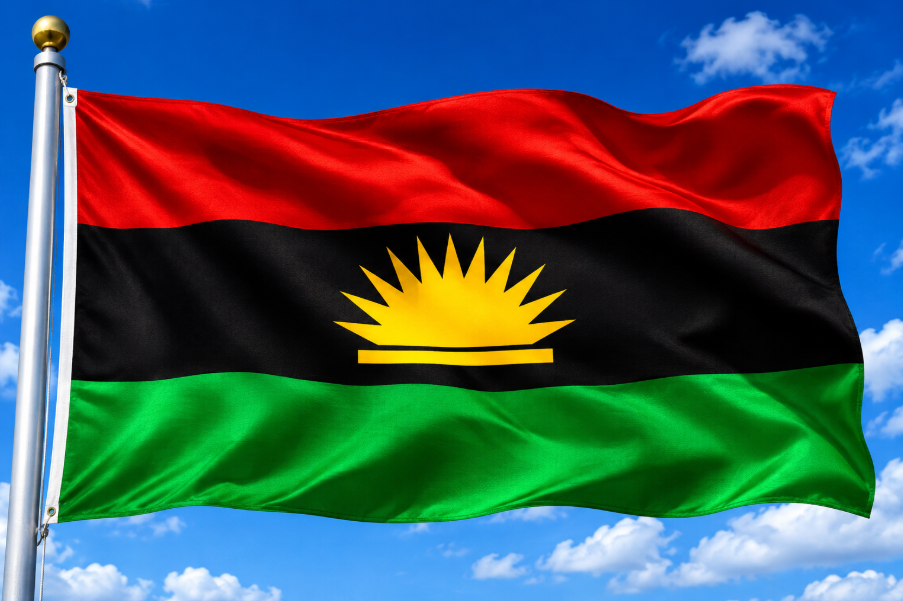
Historical record
Biafra: 1967–1970
The Republic of Biafra emerged from a period of political crisis, military coups, intercommunal violence, mass displacement and failed negotiations in post-independence Nigeria.
1960–1966 · BACKGROUND
Independence and a deepening crisis
Nigeria became independent in 1960. Political instability, two military coups in 1966, violence against Igbo communities in parts of the north, and the movement of large numbers of people toward the Eastern Region intensified the crisis.
30 MAY 1967 · DECLARATION
The Republic of Biafra is declared
Eastern Region military governor Lieutenant Colonel Chukwuemeka Odumegwu Ojukwu declared the former Eastern Region an independent republic called Biafra. The federal government rejected secession.
JULY 1967 · WAR
The Nigerian-Biafran War begins
Federal forces entered the secessionist region in July 1967. The conflict lasted about two and a half years and caused extensive civilian suffering.
1968–1969 · HUMANITARIAN CRISIS
Blockade, famine and displacement
As Biafra lost territory and access to seaports, shortages of food and medicine contributed to a devastating famine and disease outbreak. Relief operations became a major international humanitarian concern.
15 JANUARY 1970 · END OF WAR
Biafra surrenders
Biafran forces surrendered to the federal government in January 1970. Biafra ceased to exist as a de facto independent state. The war's human cost remains the subject of historical research, with estimates varying substantially.
Historical care: Accounts of the war, responsibility for violence, the famine, and death tolls differ. This page distinguishes established chronology from contested interpretation and avoids presenting one estimate as definitive.
Contemporary developments
The 2024 Lahti declaration
In late 2024, the Biafra Republic Government in Exile (BRGIE) organized a convention in Lahti, Finland, and announced a restoration declaration proposing the name “United States of Biafra.” This was an initiative by BRGIE and its supporters; it did not constitute international recognition of a new state.
01 / REFERENDUM CLAIM
1 February – 28 November 2024
BRGIE said it conducted an online and in-person self-referendum on self-determination during this period and reported more than 50 million affirmative votes.
02 / LAHTI, FINLAND
29 November – 3 December 2024
BRGIE's media invitation announced a convention in Lahti for these dates. The gathering was presented by organizers as a major step in their restoration campaign.
03 / PROPOSED NAME
United States of Biafra
The declaration proposed this name and described a federal arrangement involving 40 constituent states. It should be understood as the organizers' proposal, not an internationally recognized constitutional structure.
How to read the referendum figure: The figure of “over 50 million” is a claim made by BRGIE and repeated in materials filed under the U.S. Foreign Agents Registration Act (FARA). The FARA filing records the registrant's statement; it is not an independent audit or certification of the vote. No independently verified voter register or audited result is cited here.
Announcement date and document date
The declaration document filed with the U.S. Department of Justice is titled “Declaration of Restoration of Independent United States of Biafra, December 02, 2024, Lahti Convention, Finland.” The document has a handwritten “NOVEMBER 29th, 2024” notation above the title and a handwritten correction to the printed date in its opening text. BRGIE materials describe November 29 as the public declaration/reading and December 2 as the ratification date. The page therefore records both dates rather than treating them as interchangeable.
People and organizations
- BRGIE: The Biafra Republic Government in Exile, the organization behind the initiative described here.
- Dr. Ngozi Orabueze: Identified in the user's supplied account as representing Simon Ekpa at the Lahti gathering. This specific role should be supported with an event record or primary source before publication as a verified fact.
- Simon Ekpa: Associated with the BRGIE initiative at the time. In September 2025, a Finnish district court sentenced him to six years in prison on terrorism-related charges; the court's judgment was reported as not final at the time of Yle's report.
- Simon Ekpa's release: Simon Ekpa was released from Finnish custody on 17 November 2026, following a reduction of his prison sentence by the Finnish Court of Appeal.